![PROFILE: SBS Audio: SEEN [2024]](https://images.squarespace-cdn.com/content/v1/53005993e4b0673fce2744be/1723514538828-J7HXHQ218FV4YYEVXUYB/Screenshot+2024-08-13+at+12.01.48+pm.png)
Tea Uglow is an influential voice in the tech world. A pioneering force behind Google's Creative Lab where she led experimental tech projects for 17 years, Tea Uglow's brilliance extends beyond technology. Join Yumi Stynes as the pair walk through Tea's personal journey, and how her experience as a trans autistic woman has become a powerful lens through which she reshapes the tech landscape.
![PROFILE: Cannes Lions President of Glass [2023] - Campaign Brief](https://images.squarespace-cdn.com/content/v1/53005993e4b0673fce2744be/1780381642590-MAKNLY2RS3RJNPUUK4JQ/tea%40cannes23.jpg)
The Cannes Lions International Festival of Creativity has announced the names of the Jury Presidents who will lead juries to award this year’s Lions and set the global benchmark for excellence in creativity.
Tea Uglow, founder of Dark Swan, former CD at Google will represent Australia as jury president of Glass Lions: The Lion for Change. The Glass Lion recognises work that implicitly or explicitly addresses issues of gender inequality or prejudice, through the conscious representation of gender in advertising.

![PROFILE: Design Matters [2020]](https://images.squarespace-cdn.com/content/v1/53005993e4b0673fce2744be/1711357270696-YV8FR94358SVWY8TXWC5/Tea+Design+Matter.png)
![PROFILE: Sydney Morning Herald [2020]](https://images.squarespace-cdn.com/content/v1/53005993e4b0673fce2744be/1711358637738-TQCXCXS2SMQW3R30DZTI/077_365_03_18_SOH.jpg)
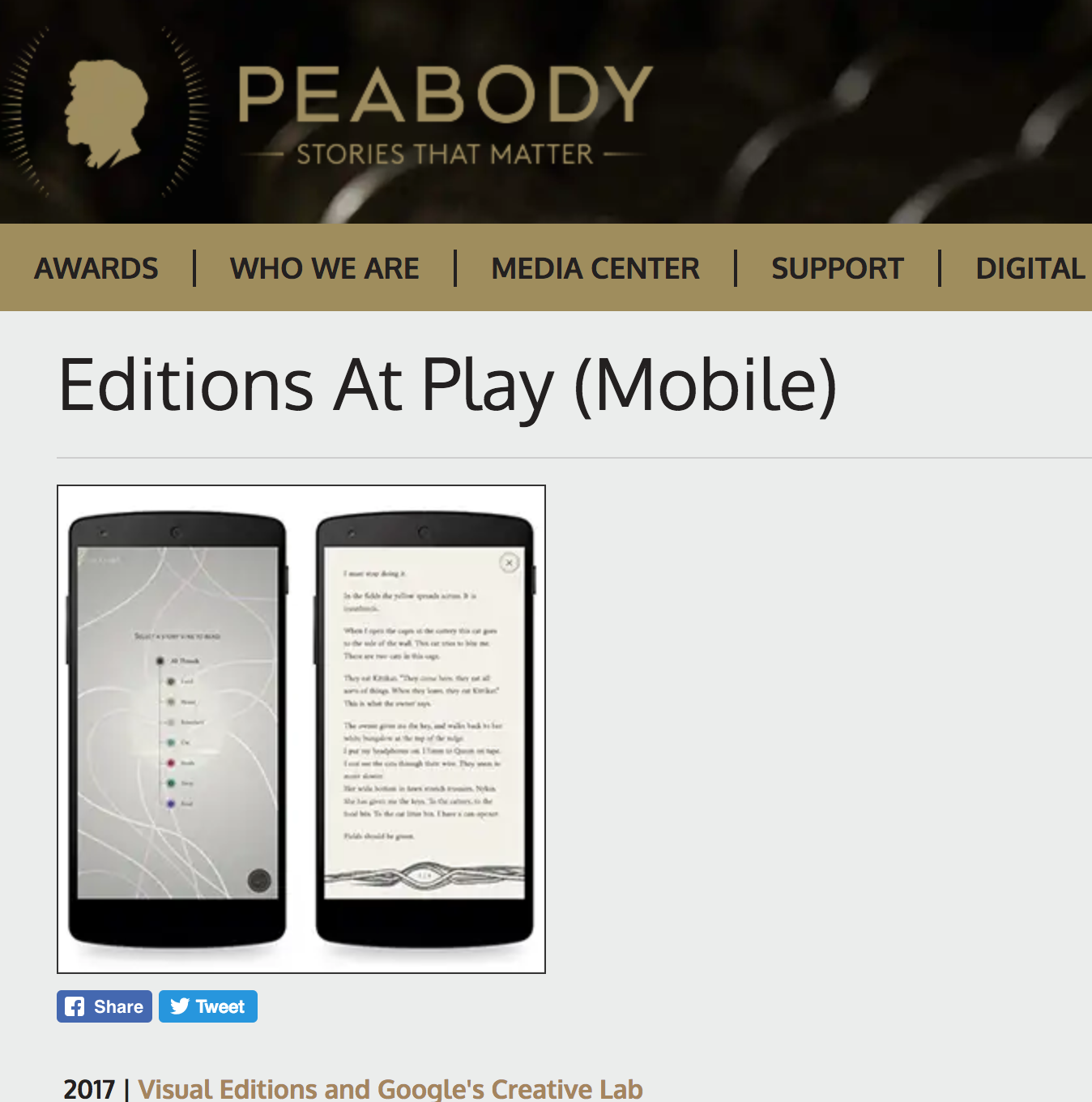

![PROFILE: Deloitte OUT50 [2018]](https://images.squarespace-cdn.com/content/v1/53005993e4b0673fce2744be/1711274507647-BC5CXCQ58K1TZITWNJSP/Tea+Pride+Cannes+beach+2018.png)
A film about how lucky I am to be able to represent, and why I choose to be a visible part of the lgbtqi movement
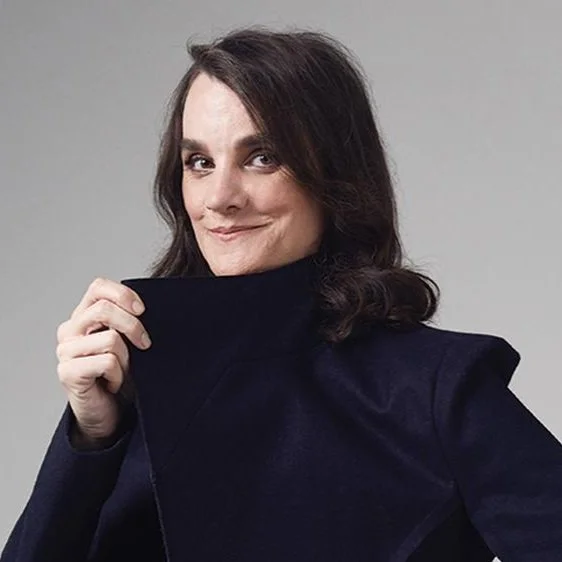
![PROFILE: WOW / Tatty Devine [2019]](https://images.squarespace-cdn.com/content/v1/53005993e4b0673fce2744be/1711274900362-DRW8BIZ4LGBUAZYNM6EL/Tea+necklace+_Tatty+dev.png)
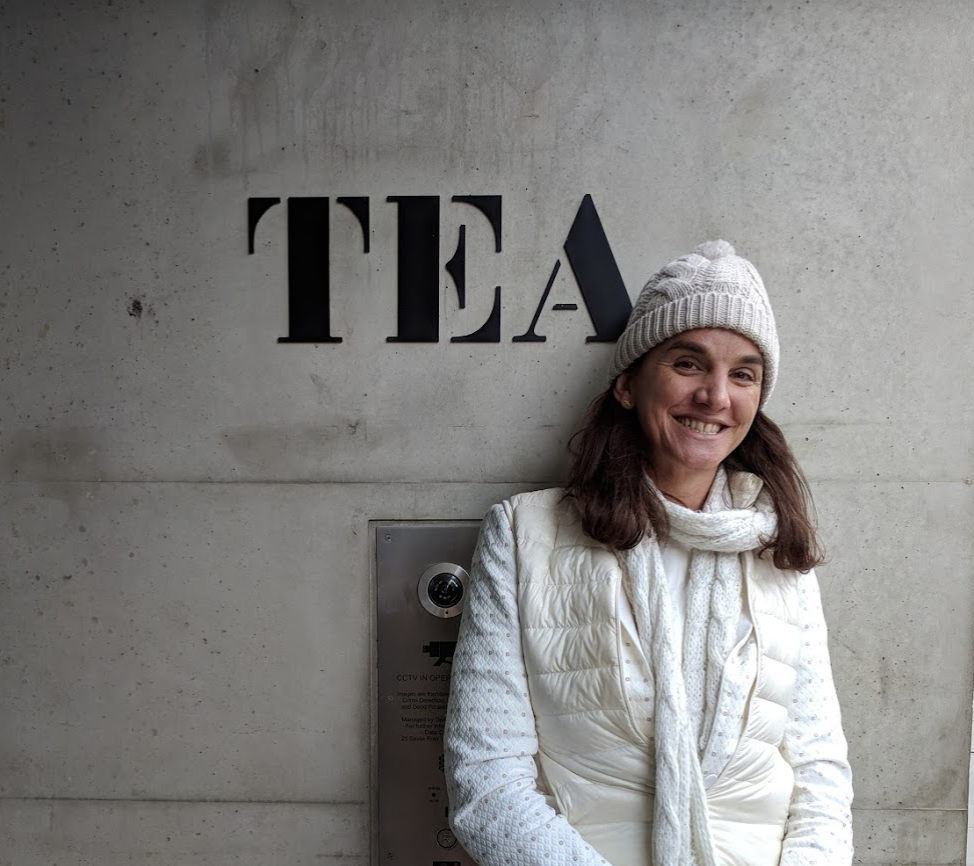
The 2018 99U Conference theme is about overcoming creative challenges, so we’re asking our speakers to reflect on a pivotal pressure-cooker moment and share how they navigated it.
![PROFILE: The Bookshelf [2018]](https://images.squarespace-cdn.com/content/v1/53005993e4b0673fce2744be/1523437818187-05YD0ELDDGCR75NZO1VB/tea-uglow-bookshelf-itsnicethat-3.jpg)
As someone whose career involves developing potentials for the future of reading, including books which can be “owned” and “borrowed” through the use of blockchain technology; and a novel set inside Google’s street view, both as part of Editions at Play, we couldn’t pass up the opportunity to find out which books from the past have impacted the brilliant Tea Uglow
![PROFILE: Top 50 female speakers [2018]](https://images.squarespace-cdn.com/content/v1/53005993e4b0673fce2744be/1515900750467-012F7HXBU94NGNB74JC8/Screen+Shot+2018-01-14+at+2.29.36+pm.png)
So proud to be on this list amongst such incredible women (and that I know some of them!)
![PROFILE: Jury President D&AD [2018]](https://images.squarespace-cdn.com/content/v1/53005993e4b0673fce2744be/1509590139537-1OOBUHSXLT9Y3KII6COM/1080x1080px-Digital-Design.gif)
Super proud to be the 2018 digital design jury president for @dadad :)
Proud professionally & as #trans #LGBTQ #creativeequals
dandad.org
https://www.dandad.org/en/d-ad-awards/
![PROFILE: Simpleweb [2017]](https://images.squarespace-cdn.com/content/v1/53005993e4b0673fce2744be/1509369501220-X3I2I9HAPDE9QE8Z53EH/Screen+Shot+2017-10-31+at+12.11.18+am.png)
Why aren’t we finding ways of building the information that we want into the way we want to experience the environment, rather than the way we’re told to experience the environment?
Tea Uglow is the Creative Director of Google’s Creative Lab in Sydney, although she prefers a Google (mis)Translate version of the title – Experimental Person in Charge.
Tea leads a team exploring “the spaces between contemporary digital technology and traditional forms of creativity and culture. That might be with museums, galleries, working with artists, filmmakers or writers and looking at what happens when those intersect.”
![PROFILE: AIGA [2017]](https://images.squarespace-cdn.com/content/v1/53005993e4b0673fce2744be/1712103859710-PBW7AIOHTQMFOLTGVUCF/tea-uglow-feature-aiga-1600x800-large.jpg)
Tea Uglow is familiar with uncertainty and doubt. But instead of seeing them in a negative light, she considers doubt, ambiguity, and uncertainty to be a central force behind her creativity and innovation.
In a recent talk about her work as creative director of the Google Creative Labs team in Sydney, she asked the audience a tough question to unpack the idea further: “Is there roomfor ambiguity and doubt when computers are in our pockets and at our sides at all times? What happens to creativity if there isn’t?” So many forms of technology are designed to do just one rigid thing, she explained, that it may be stifling human creativity and ingenuity. It’s a concerning thought for many creatives who rely on computers, tablets, apps and software for nearly every bit of their jobs.
![PROFILE: Editions at Play [2016]](https://images.squarespace-cdn.com/content/v1/53005993e4b0673fce2744be/1502151166084-70NFWNYGN863RSJ4OPCP/OysterMag_Nov16.jpg)
.. To ‘record’ the experiences of the dynamic web is like taking photos of morning dew: fragmentary and one-dimensional, unsatisfactory. The future internet, consisting of machine intelligence communicating with speech rather than all these helpful words on ‘pages’, is even tougher to pin down. Every single web experience is literally performative — a machine pirouetting through a dance of information that is unique to you in that moment and then lost forever.

![PROFILE: AXIS magazine [2017] (Japan)](https://images.squarespace-cdn.com/content/v1/53005993e4b0673fce2744be/1502088906688-YH3UYI30CBZBW0E15PX1/AXis+insta.png)
What is being proposed by Blockchain Book?
An experiment by Google Creative Lab Sydney’s Tea Uglow
Books you have finished reading may be passed on to your offspring or taken to a used book store, but with electronic books, their ownership is rather uncertain to begin with. This is because the reader merely purchases a license. Books from “Editions at Play” launched by Google this spring are part of a project that uses the distributed database Blockchain, which is the core technology behind Bitcoin. Its developer, Tea Uglow of Google Sydney, questions the future of electronic books through her experiment.
![PROFILE: Kaya FM [2017]](https://images.squarespace-cdn.com/content/v1/53005993e4b0673fce2744be/1497605748798-R4DFPWN6XV9UHIZ7FDQP/kojobaffoe.jpg)
[10 min interview from Feb 2017]
Kojo Baffoe is joined by Creative Director of Google, Tea Uglow. She is the brains behind Google’s innovative Lab in Sydney, Australia. Her works varies between non-linear narration and the physical web.
![PROFILE: It's Nice That [2017]](https://images.squarespace-cdn.com/content/v1/53005993e4b0673fce2744be/1711279922292-TMCNSWCXEY5JEVDUARES/00100trPORTRAIT_00100_BURST20200618144028043_COVER%7E2.jpg)
![PROFILE: Design Indaba [2017]](https://images.squarespace-cdn.com/content/v1/53005993e4b0673fce2744be/1503460546707-SFHW3P8UJEAAWXZS789Q/Screen+Shot+2017-08-23+at+1.56.05+pm.png)
Talking odd interplay with information and ephemeral tech with Tea Uglow
As technology becomes more functional, does it become less human-centric?
![PROFILE: Women’s History Month [2017]](https://images.squarespace-cdn.com/content/v1/53005993e4b0673fce2744be/1494904992255-9AJJKXU0701IVJOZXWON/Screen+Shot+2017-05-16+at+1.21.51+pm.png)
In honor of Women’s History Month, we’re celebrating the powerful, dynamic and creative women of Google. Like generations before them, these women break down barriers and defy expectations at work and in their communities. Over the course of the month, we’ll help you get to know a few of these Google women, and share a bit about who they are and why they inspire us.
In our second installment of the “She Word” series, we hear from Tea Uglow, a creative director in Sydney, Australia who is known for her love of coffee (but not tea), and for grabbing a “quick flat white and a chat.”

This was my first Google blog post as Tea and it could not have been more fitting or been a project I was more happy to be associated with. Blog

The very very wonderful Tea Uglow leads part of Google’s Creative Labspecialising in work with cultural organisations, artists and producers, experimenting with digital technology at the boundaries of traditional cultural practice – across theatre, literature, history, cinema, music, science and the circus.
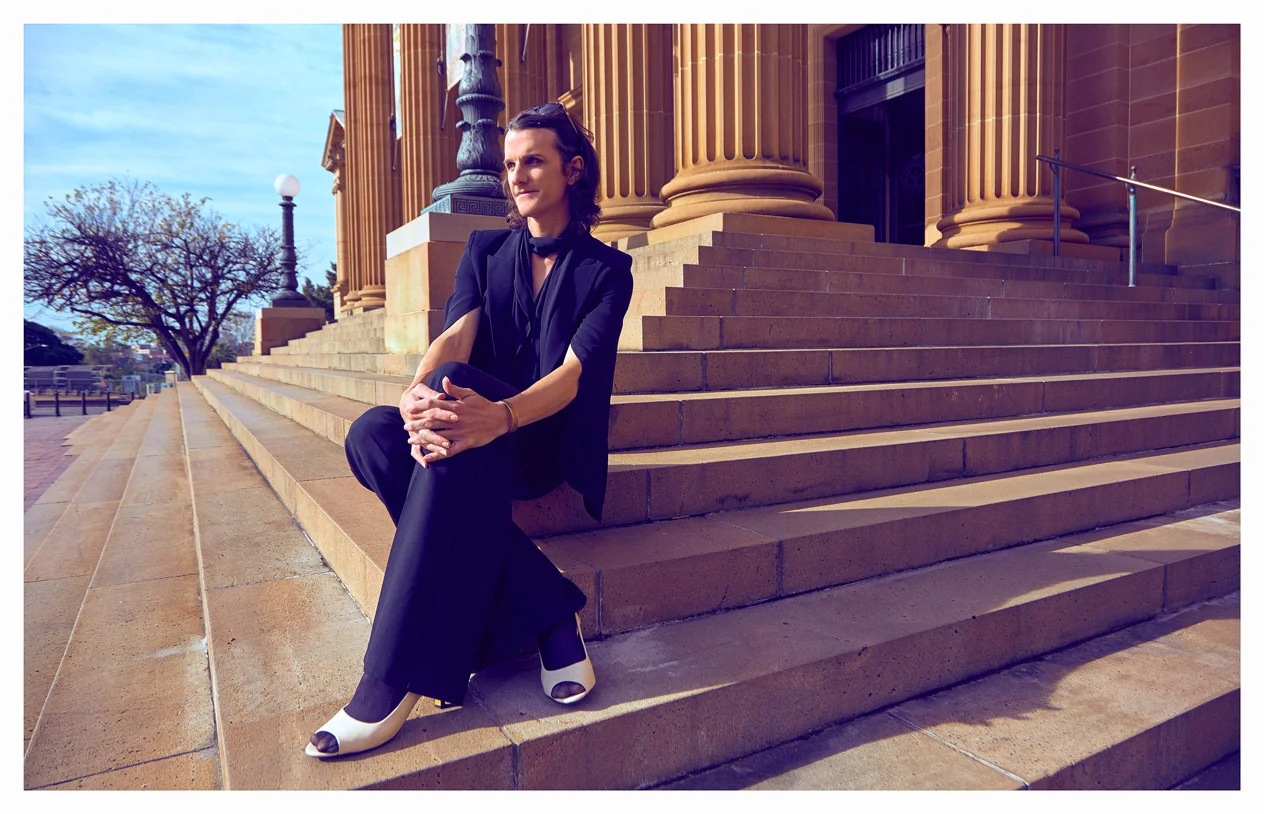
It might sound like something torn from the pages of Virginia Woolf’s Orlando, but the quote above comes from Tea Uglow, the Google creative director and tech celebrity, who is sitting on the sofa at Semi Permanent’s offices in Sydney on a sunny autumn afternoon.

AS THE creative director for Google’s Creative Lab in Sydney, Tom Uglow has a job many of us dream of, but what really goes on behind the colourful doors of one of the most innovative companies in the world?
Here, he shares what he has learned with The Collective magazine.
I THOUGHT THE INTERNET WAS AWFUL.

This article appeared in 'Desktop Magazine' in 2015
What we see today as being huge and difficult and complex simply won’t be huge and complex for the next generation. Take phones for example. They seem so ubiquitous, yet smartphones are good at distribution of information because of convenience, not design. In itself a phone does improve on what other ’things’ used to do. Before the phone came the personal computer, and before the PC, surfing the net meant mainframes. Before that we had books, cameras, maps, newspaper - the phone has aggregated all of these in digital forms mainly because it is the easiest 'device' to connect to the internet. Perhaps we should have seen that coming?

Head of Google’s Creative Labs in Asia, Tea Uglow, is about as far at the cutting edge of emerging technology, art and design as it’s possible to be. This year literature and books in all their forms are the focus of his attention. We asked Tom to tell us why and what he sees the future of reading and writing to be.
